
Eighty Years On
A Stone in a Quiet Park: Remembering Hiroshima and Nagasaki-原爆投下から80年後の夏

(The Japanese text follows the English./ 日本語は英文の後にあります)
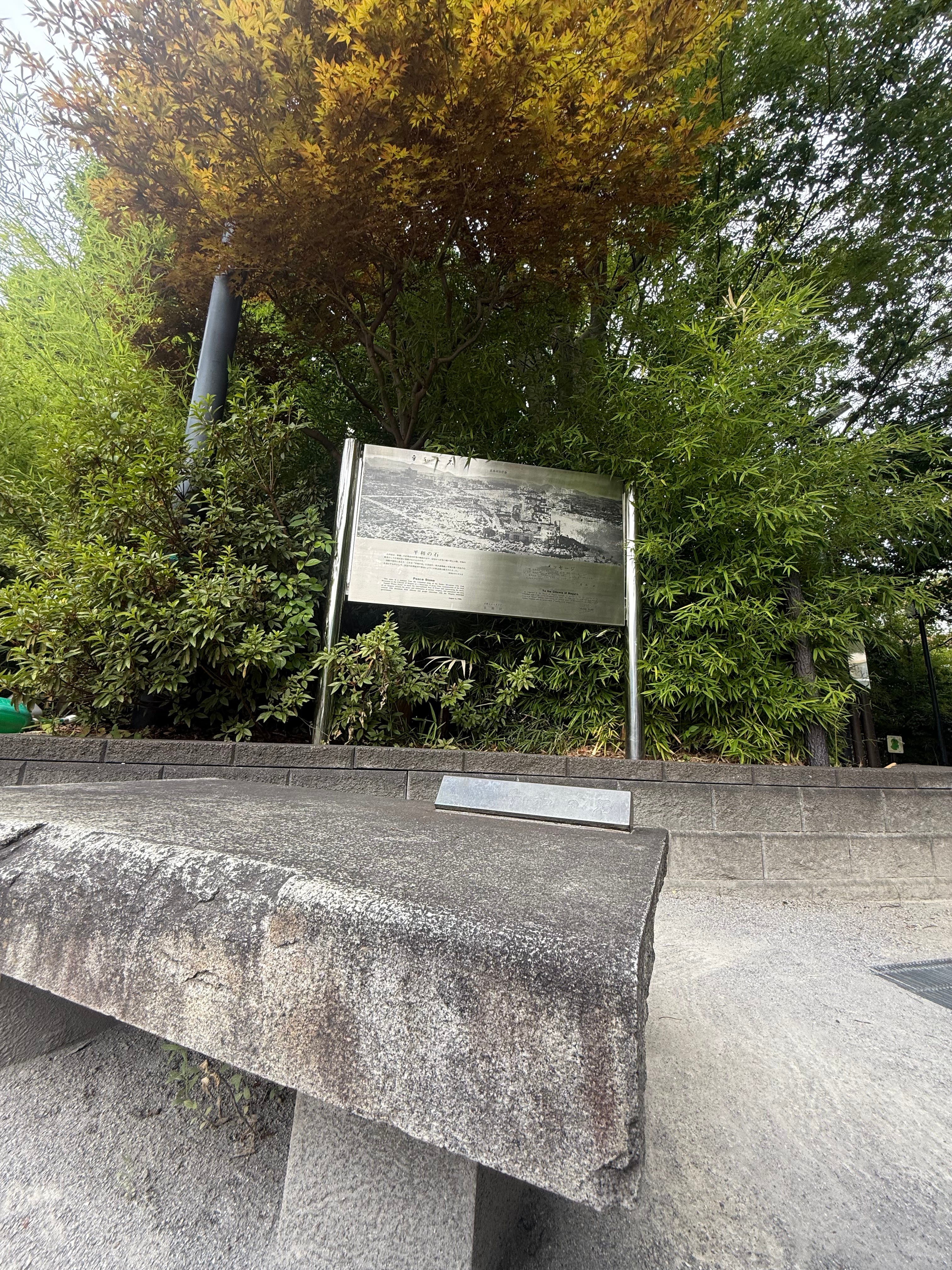
The opening photo shows a fragment of the front steps of Hiroshima’s former City Hall, damaged by the atomic bomb dropped 80 years ago on August 6. It is called the “Stone of Peace.”
Surprisingly, it isn’t in Hiroshima. It sits in a small park next to the Meguro City Office, just a short walk from Nakameguro Station in Tokyo.
My family’s home in Japan is only four train stops away, yet until this summer, I had no idea it was there. I’m a little embarrassed by that.
Every August in Japan, we hold memorial services for those who died in the bombings of Hiroshima and Nagasaki, and ceremonies to pray for peace. This year, the 80th anniversary, the mood feels more contemplative than ever. It was in this moment that I learned about the stone.
The park holds an annual “Stone of Peace Gathering” on August 6, the date Hiroshima was bombed. I missed it and went the next day instead. Standing in front of the stone—once part of the building’s steps—I felt an unexpected weight in my chest. I dropped my parasol and instinctively pressed my hands together in silent prayer.
It was a sweltering day, 35 degrees Celsius. The intense sun beat down on my bowed head and neck. Because of that, I blurted out, “It’s scorching…” — then felt, once again, a wave of self-reproach. Eighty years ago, on these steps and in the streets around them, ordinary people endured the blast and the unbearable heat that followed. I cannot imagine the pain.
The “Stone of Peace” is located in Tokyo’s Meguro Ward because, in 1986—the International Year of Peace—staff from Meguro and Hiroshima met and began an exchange. That led Meguro Ward to ask Hiroshima to send the stone.
Along with it came a message from the mayor of Hiroshima at the time:
“I hope this stone will live on as a witness to Hiroshima’s wish—the abolition of nuclear weapons and the achievement of lasting world peace—together with the people of Meguro.”


I once wrote about the atomic bomb around this same time of year. As the years pass and survivors of that horror become fewer, the question of how to prevent it from happening again remains a profound challenge for the world.
I had thought I was mindful of war and nuclear weapons, yet perhaps I had still kept them at a distance. Standing before this stone—present in Hiroshima on that August morning 80 years ago—I felt its weight more sharply here in Tokyo. Seeing it here, rather than there, made it all the more immediate. It exposed the naivety in my own thinking, and felt like a quiet wake-up call.
The park that holds the “Stone of Peace” is small, but the decision by staff from Meguro and Hiroshima to make this happen was deeply worthwhile. Whatever I can do begins with refusing to forget Hiroshima and Nagasaki.
The photograph "The Standing Boy at the Crematory", taken in Nagasaki after the atomic bombing by American military photographer Joe O'Donnell, is known around the world. Even 80 years later, we still don't know what became of that boy.
According to a report by NHK, Japan's sole public media organization, from its Nagasaki bureau, there is an account that the boy—carrying on his back a very young child, about one year old—was searching for his missing mother. It remains unknown whether he ever found her.
In both Hiroshima and Nagasaki, many children lost their families to the atomic bombs and became orphans. To me, that boy is the face of all the children who endured the bombings in those two cities—and of the adults as well, who, in the silence after the atomic bomb’s devastation, must have carried the same hollow ache in their hearts.
I offer my deepest condolences to all who lost their lives in the bombings of August 6 and 9, 1945, and my thoughts are with those who still live with their lasting effects.
冒頭の写真は80年前の8月6日に投下された原子爆弾で被爆した、旧広島市役所本庁舎の階段の一部だ。「平和の石」と名付けられている。置かれているのは広島市ではなく、東京の中目黒という駅からほど近い目黒区庁舎に隣接する小さな公園の中にある。私の日本の実家はここから電車の駅4つという近さにも関わらず、この石のことをこの夏まで知らず、そのことを少し恥じている。
日本では毎年8月のこの時期は広島と長崎の原爆による死没者への慰霊と平和祈念式が行われるが、今年は原爆が投下されてから80年ということもあり日本中がいっそう深く思いを寄せているように感じる。その中で私はこの石のことを知った。この公園でも広島に原爆が投下された8月6日には毎年「平和の石のつどい」があるそうだが私はそれを逃してしまい、翌日にこの公園を訪ねた。階段の一部であったその石を目の前にすると胸にぐっとくるものがあり、日傘を地面に落とし手を合わせずにはいられなかった。その日は摂氏35度という猛暑日で私の垂れた頭とうなじは強い日差しに照りつけられ、思わず「暑っつ…」と言葉が出てしまい、再び自分を恥じた。80年前にこの階段で、この階段の周りで原爆を浴びた市井の人々はどんなに熱かっただろうか。私などには想像が及ばない辛さであったろう。
なぜ「平和の石」が東京の目黒区にあるかというと、1986年の国際平和年に目黒区職員と広島市職員の交流があり、それをきっかけに目黒区が広島市にお願いして送ってもらったという。石と一緒に当時の広島市長から送られたメッセージにこうある。”この石が、核兵器の廃絶と世界の恒久平和の実現という、広島の悲願を訴える生き証人として、目黒区民の皆さんと共に生き続けることを願っています。”


私は以前、やはりこの時期に原爆に関して文章を書いた。年月が過ぎ、恐ろしい原爆を体験してきた人々が少なくなる中でこの先どのようにして同じことが繰り返されないようにするかは世界の大きな課題だ。こうして80年前のあの朝に広島に存在したこの石を目の前にすることは、東京にいながらも、というか東京で見ることでさらに、身体に強く訴えかけてくる具体的な広島に感じた。自分では常に戦争や核保有について考えているつもりではいたが、遠い話の気がしてはいなかったか。自分の考えのナイーブさを思い知らされ、背中を押される気持ちがした。
「平和の石」が置かれている公園はとても小さな公園だけれど、きっかけをつくった目黒区と広島市の職員の行動はとても価値ある判断だったと感じる。自分に何ができるかは難しい課題だけれど、広島と長崎で起きたことを忘れないことから始まるのだ。
アメリカの従軍カメラマンだったジョー・オダネル氏が原爆が投下された後の長崎で撮影した「焼き場に立つ少年」は世界的に知られる。80年経った今もあの少年がその後どうなったのかはわかっていない。日本の公共放送NHKの長崎局のリポートの中で、あの少年は1歳くらいの幼い子を背負って、いなくなった母親を探していた、という証言が得られている。彼が母親を探し出せたのかもわからない。
広島と長崎では原子爆弾で家族を亡くし孤児となった子どもたちがたくさんいた。あの少年は当時の広島と長崎で被爆したすべての子どもたち、いやすべての人たちの姿だと私は思う。
1945年8月6日と9日の被爆で亡くなられたすべての被害者に心からの追悼の念を捧げると共に、今もさまざまな後遺症に苦しむ方々に心を寄せています。